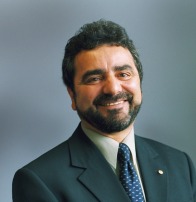
Professor Joseph Lo Bianco
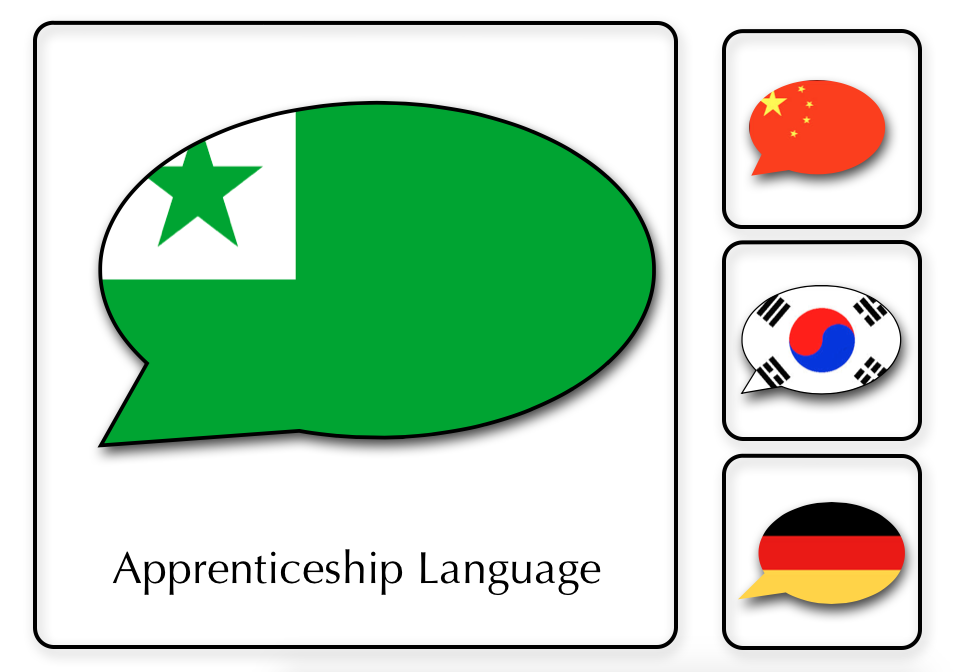
"The second component of the strategy is for a universal apprenticeship in learning how to learn languages, to be located in the pre-school, infants and upper primary school years.
The goal of the ‘early start’ is to make the most of what young learners are naturally disposed to do with languages, especially their greater openness to new sounds, to experimentation, role-play, and other activities which early language learning requires but which older learners are often less willing to do.
This should be treated as an ‘apprenticeship’ in how to learn languages, how to come to know what languages involve and to gain control of language learning strategies and approaches. By cultivating a rich potential to learn languages among all students, whether they are new beginners or already speakers of other languages, students will be more likely to successfully transfer such skills to different languages, if they choose or are required to switch languages. Instilling language awareness, encouraging practical usage and learning how to learn languages, will likely result in increased student awareness and knowledge of English and its literacy. This is the outcome which research indicates routinely accompanies such learning.
Education officials, particularly in those states where early childhood services are co-located with ministries of education, should explore ways to encourage the inclusion of second language activities in the early childhood area, and to encourage increased numbers of bilingual personnel to undertake training and seek employment as tutors and teachers in the sector.
All states should aim to ensure that the pre-school years and the earliest years of schooling provide rich experiences of language encounter so that by the upper years of primary school a sense of bilingual awareness is widespread among all students. A priority of national language policy should be to support innovations in this early stage of education that support emergent bi-literacy, that is the links between initial English literacy and other language literacy and bilingual oral development."
Lo Bianco, J. (2009), Second Languages and Australian Schooling. Australian Council for Educational Research, page 69.
|
Esperanto proves that the technical problems involved in ‘inventing’ a new language are able to be solved, as have many other invented languages, but by its endurance, under sometimes appalling oppression, Esperanto proves something deeper and profoundly meaningful about human ideals. These ideals relate to our continual striving for an interconnected global culture, a world in which communication problems can be tackled, internationalism promoted and cultural diversity respected.
A more pragmatic promise from Esperanto is that it offers the opportunity for millions of otherwise disadvantaged individuals to gain a respectable proficiency in a language that opens up different worlds to them. Our schools and universities must continue to implant language study for all students, we don’t want a world in which the only monolinguals are native English speakers, but we must also be realistic and recognise the immense global standing of English. Perhaps for this reason our education institutions struggle to establish continuous, effective and serious language programs for most learners. Esperanto has much to offer in this context, given that its teaching can be integrated into regular classroom time, by mainstream teachers. I believe that the widespread learning of human natural languages is an essential requirement for our education system, but I see a role for Esperanto within this overall approach. The current arrangements for global communication are unequally distributed, and Esperanto helps share the load more equitably. I see a place for Esperanto in the repertoire of language education options for students and I wish your program every success. Keep up the fine work. President of the Australian Academy of the Humanities To see a more complete list of Professor Lo Bianco's credentials please click here. |
016